
Outcome 1
No dependency installation or package-script execution during analysis
Use case
Paneweaver inspects the repository, identifies framework and build behavior, preserves compatible source, and adds a reviewable Tauri 2 wrapper with explicit ownership boundaries.
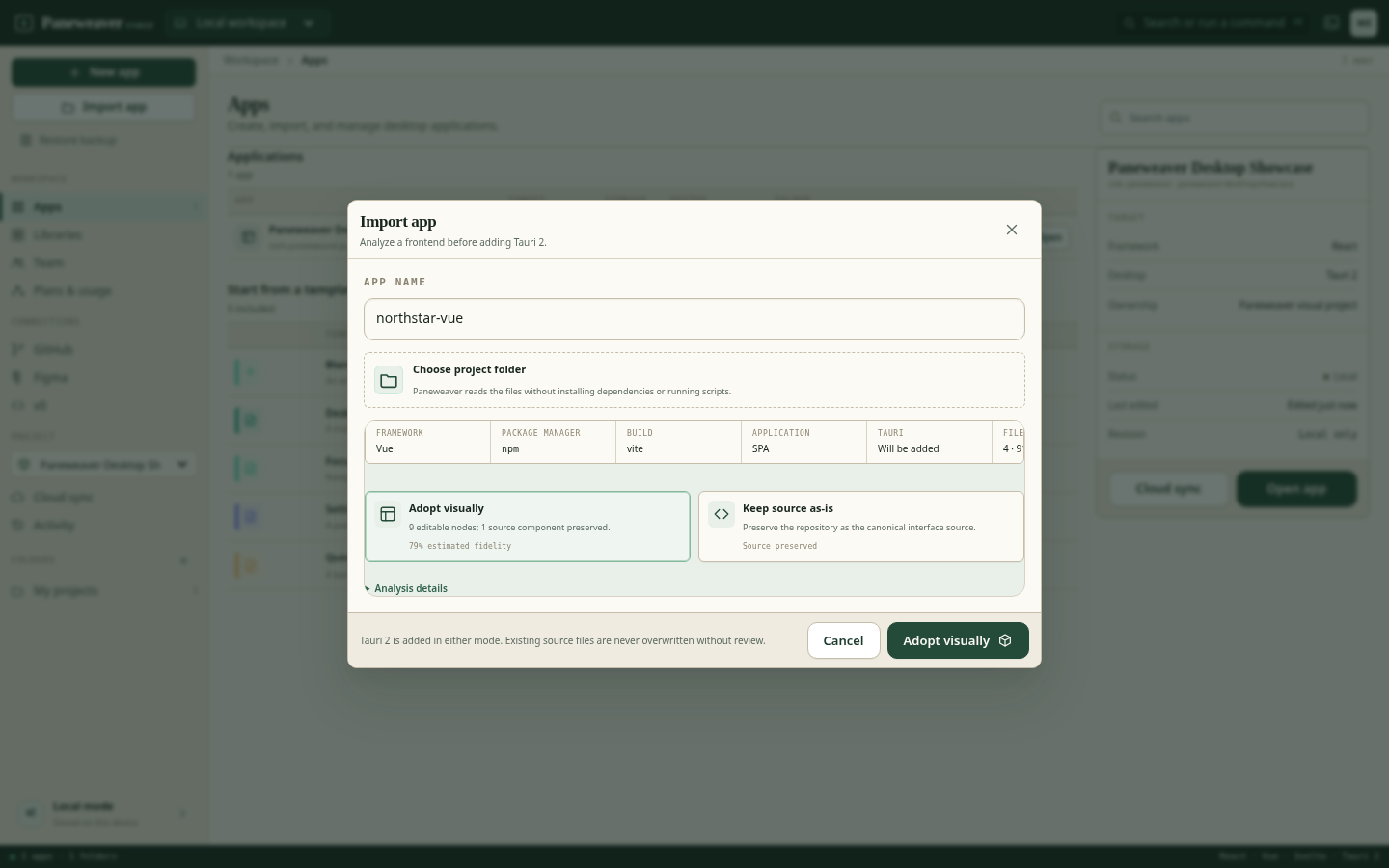
The result
Paneweaver is useful when visual speed, native access, code extensibility, and long-term source ownership all matter.
No dependency installation or package-script execution during analysis
Existing package manager, lockfiles, and source preserved
Desktop configuration and capabilities added without a rewrite
What you can build
Use a visual project, an existing frontend, a design import, or a reusable team foundation according to the application you actually have.
How Paneweaver helps
The visual model accelerates the repeatable interface and workflow work. Generated TypeScript, Rust, Tauri configuration, and GitHub review remain available for everything else.
A practical path
Private beta
Tell us about the workflow, current frontend or design, team, and native capabilities the app needs.