
Outcome 1
Rapid visual scaffolding for dense technical interfaces
Use case
Paneweaver is well suited to API clients, launchers, log viewers, repository utilities, diagnostics, local dashboards, and other tools that combine a web interface with desktop access.
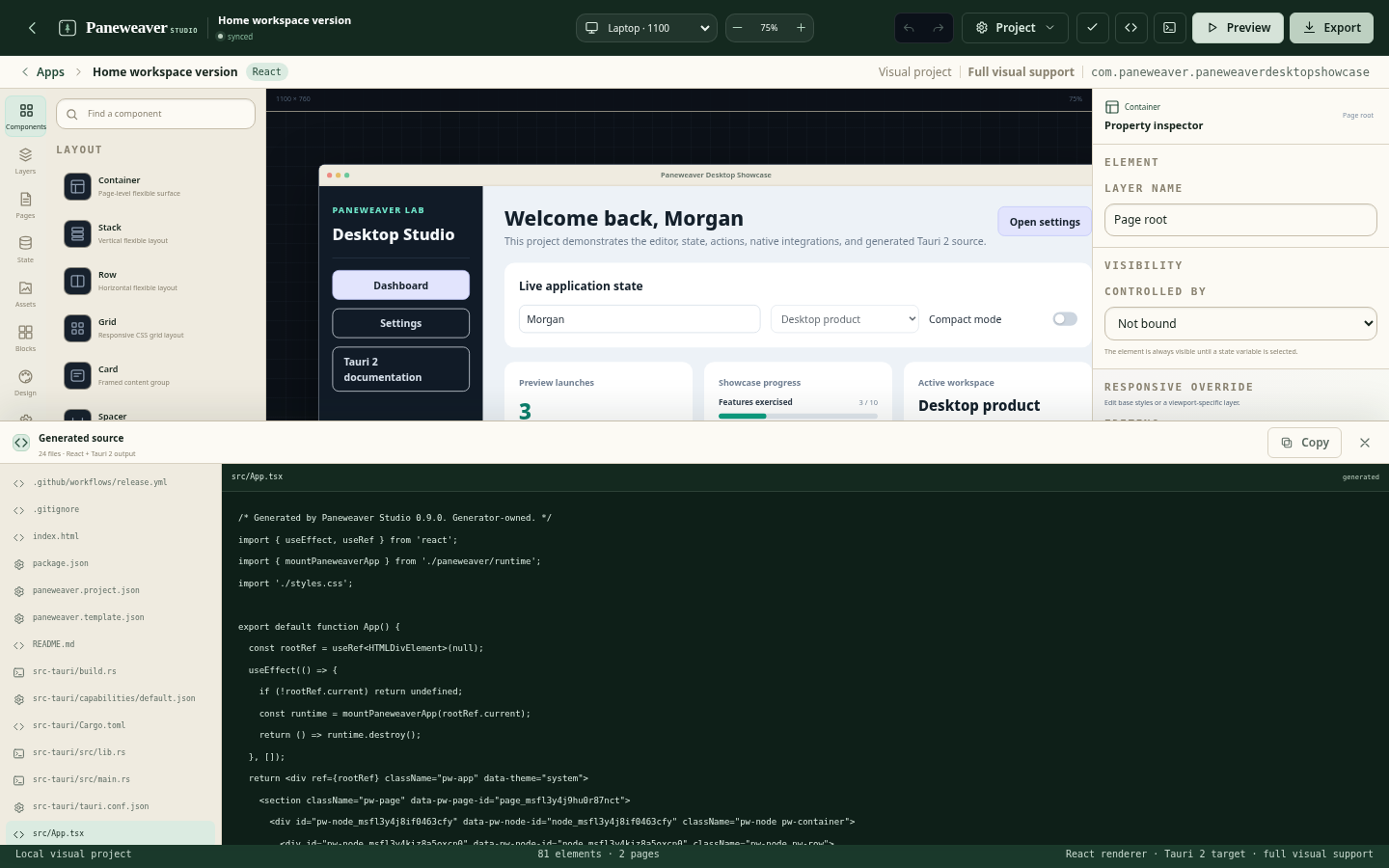
The result
Paneweaver is useful when visual speed, native access, code extensibility, and long-term source ownership all matter.
Rapid visual scaffolding for dense technical interfaces
TypeScript and Rust extension points for real logic
Explicit filesystem, shell, HTTP, clipboard, and notification permissions
What you can build
Use a visual project, an existing frontend, a design import, or a reusable team foundation according to the application you actually have.
How Paneweaver helps
The visual model accelerates the repeatable interface and workflow work. Generated TypeScript, Rust, Tauri configuration, and GitHub review remain available for everything else.
A practical path
Private beta
Tell us about the workflow, current frontend or design, team, and native capabilities the app needs.